
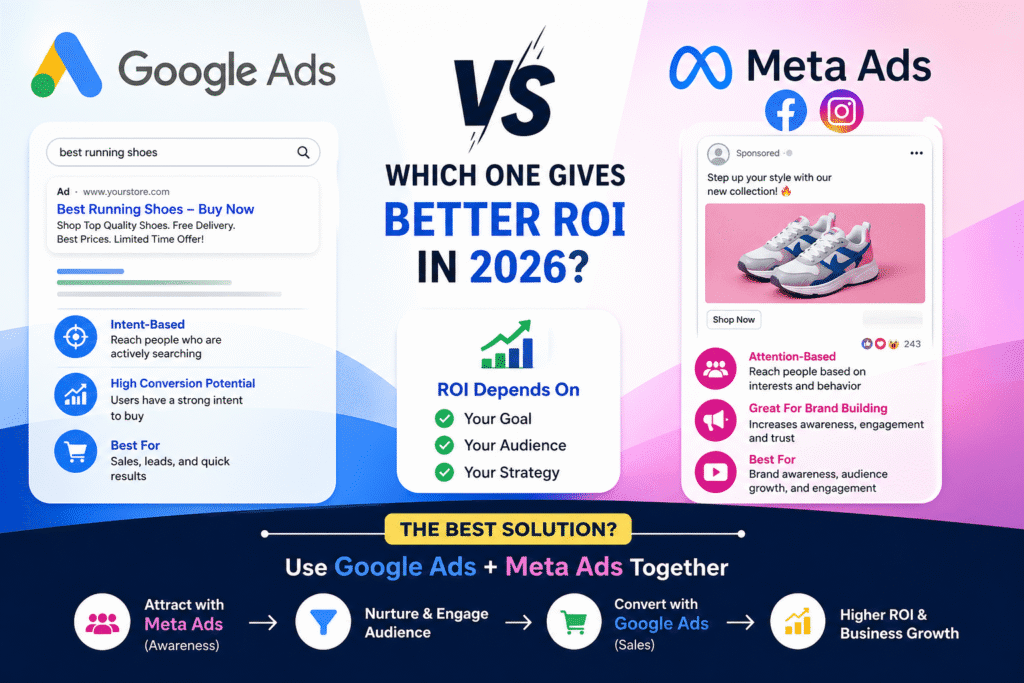
In 2026, businesses are not just asking which platform is better—they want to know how to actually get better ROI from their ads. The debate between Google Ads and Meta Ads is no longer about choosing one; it’s about using both the right way to solve real marketing problems like low conversions, high ad costs, and poor targeting.
Problem 1: Getting Traffic but No Sales
If you are running ads but not getting conversions, the issue is usually poor intent targeting. This is where Google Ads becomes your solution. Focus on high intent keywords like “buy,” “best,” or “near me” so your ads reach people who are already ready to take action. Use simple landing pages with one clear goal, fast loading speed, and a strong call-to-action. This approach turns random clicks into actual customers and improves your ROI quickly.
Problem 2: No One Knows Your Brand
If people are not familiar with your brand, they won’t trust you enough to buy. This is where Meta Ads solves the problem. Use short-form video ads, reels, and simple creatives to grab attention. Target audiences based on interests and behavior, and focus on engagement marketing instead of direct selling. The goal here is to create demand, build trust, and stay in front of your audience regularly. Over time, this lowers your cost and increases conversions.
Problem 3: High Ad Cost, Low Return
Many businesses complain that ads are getting expensive in 2026. The real issue is running ads without a proper system. The solution is to use a full funnel marketing strategy. Start with Meta Ads at the top of the funnel (TOFU) to attract and engage users, then move them to Google Ads at the bottom of the funnel (BOFU) where they are more likely to convert. This reduces wasted spend and improves overall performance marketing results.
Problem 4: Poor Ad Performance
If your ads are not performing, it’s often due to weak creatives or poor messaging. On Meta Ads, focus on strong hooks in the first 3 seconds and use relatable content. On Google Ads, improve your ad copy by matching it closely with search intent. Always test different versions of ads and track what works best. Small changes can make a big difference in ROI.
Best Strategy for Maximum ROI in 2026
The most effective solution is not choosing one platform but combining both smartly. Use Meta Ads to create awareness and attract attention, and use Google Ads to capture demand and drive conversions. This combination helps you reach users at every stage of their journey, from discovery to purchase.
Final Thoughts
If your goal is better ROI, stop thinking in terms of Google Ads vs Meta Ads. Instead, focus on solving your marketing problems with the right strategy. Google Ads helps you convert people who are ready to buy, while Meta Ads helps you build interest and trust. When used together with a clear plan, they create a powerful system that drives consistent results in today’s competitive digital world.
- Which is better for beginners, Google Ads or Meta Ads?
If you want quick results, start with Google Ads. If you want to build an audience slowly, Meta Ads is a good choice.
- Can I run both Google Ads and Meta Ads together?
Yes, and it’s actually the best strategy. Use Meta Ads to attract people and Google Ads to convert them into customers.
- Which platform is cheaper in 2026?
Meta Ads usually has a lower cost per click, but Google Ads often gives better conversions, so overall value depends on your goal.
- Why am I not getting sales from my ads?
You may be targeting the wrong audience or using weak creatives. Focus on high intent keywords for Google Ads and engaging content for Meta Ads.
- How much budget should I start with?