
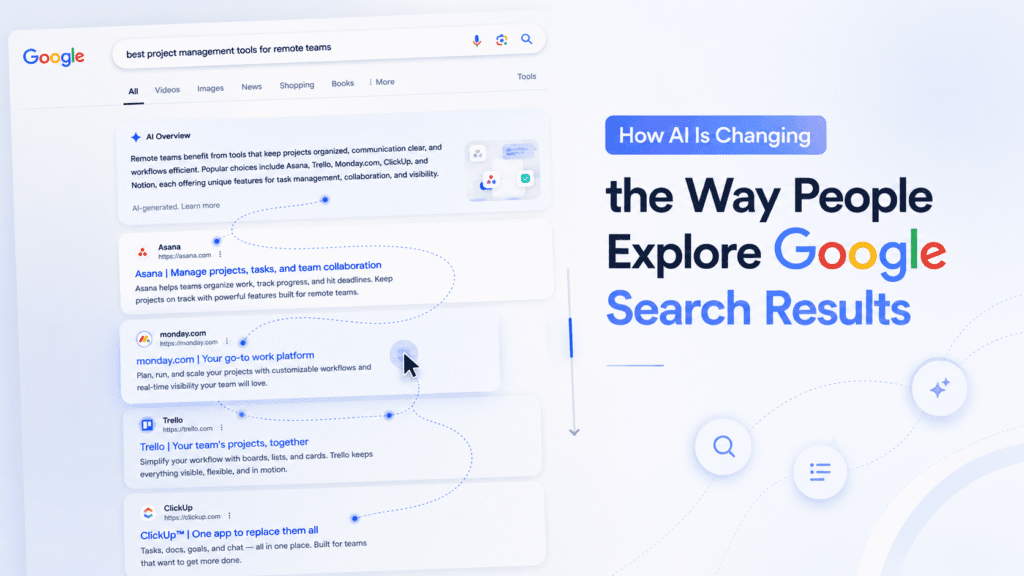
Google Search Is No Longer About Fast Clicks, It’s About Evaluation
A recent study analyzing 846,000 Google search sessions has revealed a major shift in how users interact with Search Engine Results Pages (SERPs). The research shows that users are no longer simply scanning the first few results and clicking immediately. Instead, they are spending more time reading, comparing, scrolling, and reconsidering their options before making a decision. This behavioral shift is being heavily influenced by Google’s AI Overviews, which are changing the entire search experience.
For SEO professionals, digital marketers, content creators, and website owners, these findings provide valuable insights into the future of organic search traffic, user engagement, and search engine optimization strategies.
How AI Overviews Are Reshaping Search Behavior
Google’s AI Overviews have introduced a new layer of information directly within search results. Instead of immediately clicking a website, users are increasingly consuming information on Google’s platform itself.
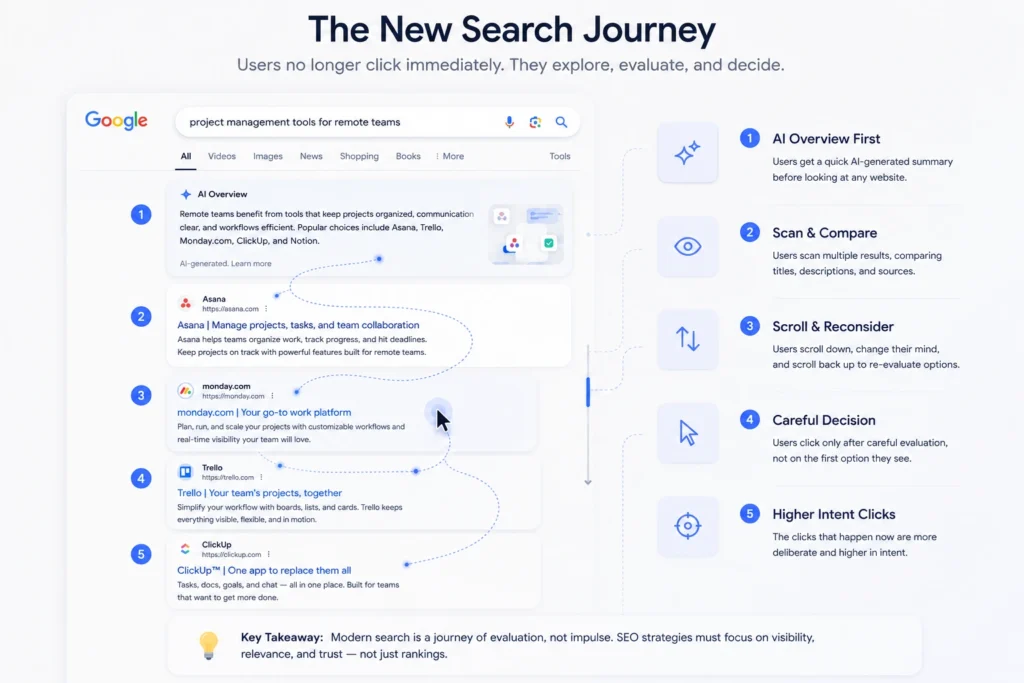
The study found that users with AI Overviews spend significantly more time evaluating search results. Rather than making quick decisions, searchers pause, scroll through multiple results, move back up the page, and compare options before deciding whether to click a website or continue searching.
This indicates that search behavior is evolving from a simple “search and click” process into a more deliberate “search, evaluate, compare, and decide” journey.
The Rise of Back-Scrolling and Search Reconsideration
One of the most interesting findings from the study is the increase in back-scrolling behavior.
Researchers discovered that users frequently scroll back upward after moving down the page. When AI Overviews are present, this behavior becomes even more common. Users often revisit previous results, compare snippets, and re-evaluate information before selecting a source.
This suggests that ranking position alone is becoming less important than the overall quality of a search result listing. Users are actively comparing multiple sources rather than automatically clicking the first result.
For businesses and marketers, this means that compelling title tags, optimized meta descriptions, and strong search snippets are becoming critical competitive advantages.
Why Organic Click-Through Rates Are Changing
The emergence of AI-generated search summaries has contributed to the growth of zero-click searches. In many cases, users receive enough information directly on the search results page without visiting an external website.
Several studies have shown that AI Overviews can reduce organic click-through rates and increase zero-click search behavior. Users are finding answers directly within Google, leading to fewer outbound clicks to publishers and websites.
However, this doesn’t mean SEO is becoming obsolete. Instead, it means SEO strategies must evolve.
Websites now need to compete not only against other websites but also against Google’s AI-generated answers.
What This Means for Modern SEO
The findings highlight a fundamental change in search engine optimization.
Traditional SEO focused heavily on ranking position. While rankings remain important, modern SEO must also focus on visibility, relevance, and user trust.
Some of the most important SEO priorities moving forward include:
1. Stronger Title Tags
Users are spending more time evaluating search results. A compelling title tag can significantly improve visibility and attract attention during this evaluation process.
2. Better Meta Descriptions
Since users are comparing multiple listings, meta descriptions now play a larger role in influencing clicks and communicating value.
3. Enhanced E-E-A-T Signals
Google increasingly rewards content that demonstrates Experience, Expertise, Authoritativeness, and Trustworthiness (E-E-A-T). Building authority can improve both rankings and user confidence.
4. Search Intent Optimization
Content must directly satisfy user intent. Pages that provide clear, comprehensive, and relevant information are more likely to earn clicks and engagement.
5. Brand Recognition
When users evaluate multiple search results, familiar and trusted brands often gain an advantage. Investing in brand visibility can improve click-through rates even when rankings remain unchanged.
The Growing Importance of User Experience
The study also highlights the importance of user experience in modern search marketing.
As users spend more time comparing results, websites need to deliver immediate value after the click. Slow-loading pages, poor design, intrusive advertisements, and weak content can quickly drive visitors away.
Google’s increasing focus on user signals means businesses should prioritize:
- Core Web Vitals optimization
- Mobile-friendly design
- Fast page speed
- High-quality content
- Clear site architecture
- Better engagement metrics
These factors contribute to stronger search performance and improved user satisfaction.
AI Search and the Future of Organic Traffic
The growth of AI-powered search experiences is creating a new reality for publishers and marketers.
Rather than focusing solely on traffic volume, businesses may need to focus more on traffic quality. Users who eventually click through after evaluating multiple options often demonstrate stronger intent and higher engagement levels.
This shift suggests that future SEO success will depend on creating content that is not only discoverable but also persuasive, trustworthy, and differentiated from AI-generated summaries.
Brands that provide unique insights, original research, expert perspectives, case studies, and first-hand experience are likely to perform better in an AI-dominated search ecosystem.
Key Takeaways for Digital Marketers
The analysis of 846,000 Google search sessions reveals a clear transformation in user behavior.
Users are:
- Spending more time on search results pages.
- Reading and comparing multiple listings.
- Scrolling back and reconsidering options.
- Clicking less impulsively.
- Interacting heavily with AI Overviews.
- Participating in more zero-click searches.
For SEO professionals, the message is clear: visibility alone is no longer enough. Success requires compelling search listings, authoritative content, strong branding, excellent user experience, and a deep understanding of search intent.
As Google continues integrating AI into search, marketers who adapt to these changing behaviors will be better positioned to maintain visibility, earn clicks, and drive meaningful organic traffic in the years ahead.
- Why are users clicking less on Google search results?
AI Overviews provide instant answers, allowing users to gather information without immediately visiting a website.
- What is the biggest change in user search behavior?Users are spending more time comparing multiple results and evaluating options before making a click.
- Does ranking #1 still matter for SEO?Yes, but rankings alone are no longer enough. Trust, relevance, and compelling search snippets are equally important.
- How do AI Overviews impact organic traffic?They can reduce clicks for some queries by answering questions directly within the search results page.
- How can marketers adapt to AI-driven search?Focus on strong content, E-E-A-T signals, brand authority, user experience, and optimizing for search intent.